The Ultimate Guide to Intermediate First Aid: Frequently Asked Questions Answered
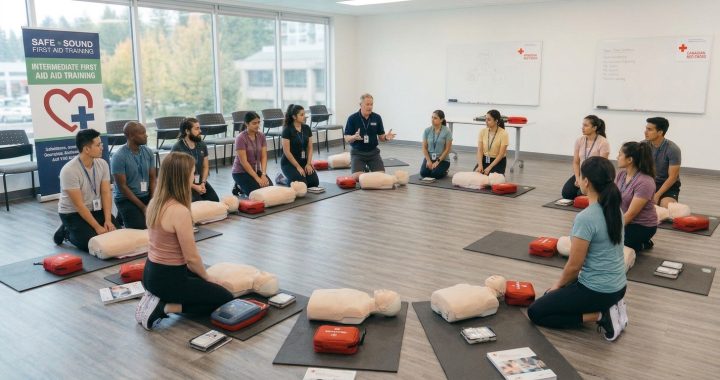
If you are checking out workplace safety mandates, pursuing career prerequisites, or simply wanting to be fully prepared to handle emergencies at home, understanding Intermediate First Aid is essential. Formerly recognized across Canada and various jurisdictions as Standard First Aid, this comprehensive training course has evolved under CSA standards (such as CSA Z1210-17) to provide a comprehensive, life-saving skill set.
Because training requirements, workplace regulations, and certification timelines can sometimes feel overwhelming, we’ve pulled together the most frequently asked questions. Whether you are wondering about course lengths, differences between levels, or recertification rules, here is everything you need to know about Intermediate First Aid.
1. What is Intermediate First Aid?
Intermediate First Aid is a comprehensive training program designed to equip individuals with the skills to recognize, assess, and manage a wide variety of life-threatening and non-life-threatening medical emergencies.
The curriculum goes far beyond basic bandaging. It covers emergency scene management, cardiovascular emergencies, cardiopulmonary resuscitation (CPR), Automated External Defibrillator (AED) usage, major and minor wound care, bone, muscle, and joint injuries, head and spinal trauma, environmental illnesses (hypothermia, heat stroke), poisons, and sudden medical conditions like heart attacks, strokes, and diabetic emergencies. It is structured for both workplace compliance and personal preparedness.
2. What is the difference between Basic First Aid and Intermediate First Aid?
The primary differences lie in the depth of curriculum, scope of medical conditions covered, and total training hours:
Basic First Aid (formerly Emergency First Aid): Typically delivered as an 8-hour course. It focuses primarily on life-threatening conditions, including primary assessment, CPR/AED, choking, and severe bleeding management.
Intermediate First Aid (formerly Standard First Aid): A comprehensive 16-hour course (or blended equivalent). In addition to everything covered in Basic First Aid, it dives deep into secondary assessments, head/neck/spinal injuries, musculoskeletal trauma (fractures, sprains, strains), environmental emergencies, poisons, medical conditions (epilepsy, asthma, anaphylaxis, diabetes), and psychological trauma support.
3. How long is the Intermediate First Aid course?
A full, in-person Intermediate First Aid course takes 16 hours (usually split across two full training days). However, many providers offer a Blended Learning format to accommodate busy schedules. The blended option typically consists of:
Online Theory: Up to 8 hours of self-paced digital learning completed online prior to class.
In-Class Practical Session: Roughly 7 to 8 hours of hands-on instructor-led skill practice, evaluations, and physical assessments.
4. Does Intermediate First Aid include CPR and AED training?
Yes, absolutely. Intermediate First Aid always includes integrated instruction on Cardiopulmonary Resuscitation (CPR) and the operation of an Automated External Defibrillator (AED).
You can choose between two CPR levels depending on your occupational or personal goals:
CPR Level A: Focuses on adult-only resuscitation techniques. Ideal for specific workplaces or personal interests.
CPR Level C: Covers comprehensive resuscitation techniques for adults, children, and infants. This is the most widely requested level for teachers, daycare workers, health care aides, and general workplace compliance.
5. Is Red Cross Intermediate/Standard First Aid a nationally recognized certification?
Yes. Certifications issued by major designated providers like the Canadian Red Cross or St. John Ambulance are nationally recognized across Canada. They comply fully with provincial and territorial occupational health and safety (OHS) regulations, the Canada Labour Code, and national CSA standards (CSA Z1210-17). If you move or transfer jobs across provincial lines, your certification remains widely accepted by employers.
6. Does WorkSafeBC recognize Intermediate First Aid as equivalent to Level 2?
Under modern CSA-aligned occupational health and safety guidelines, provincial boards have streamlined course names. For instance, WorkSafeBC recognizes valid Canadian Red Cross Intermediate First Aid (Level A or C) certifications as meeting the respective provincial workplace first aid regulatory standards for designated medium-to-low hazard workplaces previously associated with older legacy designations. Always consult your specific provincial safety board or company safety officer to confirm exact workplace hazard tier compliance.
7. What are the prerequisites for taking an Intermediate First Aid course?
There are no educational or age prerequisites required to enroll in an initial Intermediate First Aid course. Anyone looking to expand their personal knowledge, fulfill school requirements, or satisfy job onboarding can sign up. Participants must be physically capable of performing kneeling movements, chest compressions on manikins, and participating in active peer-to-peer practical scenarios.
8. How long is an Intermediate First Aid certificate valid?
A Red Cross Intermediate First Aid, CPR, and AED certification is valid for 3 years from the date of successful completion.
To maintain compliance and keep your skills sharp, you must take a recertification course or a full course renewal before the expiry date printed on your card or digital certificate. Once a certificate has completely expired, you cannot take a short recertification course; you must retake the full 16-hour (or blended) course from scratch.
9. Can I take an Intermediate First Aid recertification class if my card is expired?
No. If your certification has lapsed past its official expiry date, regulatory bodies and training agencies require you to register for the full Intermediate First Aid course. Recertification classes are exclusively reserved for candidates whose current certificates are still active and valid at the time of the refresher training. If your certificate is still current, the agency you re-register with may offer you a lower, renewal rate. They may require proof of current certification.
10. What do I need to pass the course?
To successfully pass the course and earn your 3-year certification card, you must meet four core evaluation criteria set by training agencies:
- 100% Attendance: Attend and actively participate in all required instructional hours.
- Skill Demonstration: Demonstrate correct physical competency in all required practical skills (such as bandaging, rescue positioning, CPR compressions, and AED pads placement).
- Written Examination: Achieve a passing score of at least 75% on a closed-book, independent written knowledge evaluation.
- Professional Conduct: Adhere to safety guidelines and respectful participation standards throughout the class.
10. Where can I find an Intermediate First Aid course in my area?
In Metro Vancouver & the Tri-Cities, BC: Safe + Sound First Aid Training offers both public classes and private group sessions. Contact us to find the right fit or check our course schedule.
Elsewhere in Canada: Use the Canadian Red Cross course locator to find providers near you.