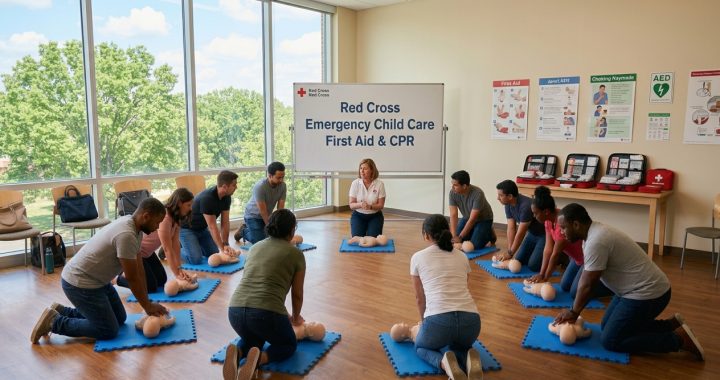
Starting a career in Early Childhood Education (ECE) in British Columbia is a deeply rewarding journey. However, before stepping into a licensed childcare setting or completing your ECE diploma, you must fulfill vital provincial safety requirements—including getting an approved first aid and CPR certification.
Trying to figure out which first aid course to take can be confusing, especially when faced with titles like Intermediate First Aid, Basic First Aid, Occupational First Aid, CPR C, and Emergency Child Care First Aid. Choosing the wrong course leads to wasted time, unnecessary expenses, and compliance rejections during provincial licensing inspections.
So, which first aid course do you need for ECE certification in BC? The straightforward answer is the Canadian Red Cross Emergency Child Care First Aid & CPR Level B.
In this comprehensive guide, we unpack the provincial regulations governing childcare first aid in BC, highlight the key features and benefits of Emergency Child Care First Aid, and explain why training with Safe + Sound First Aid Training in Coquitlam ensures you remain fully compliant and confident on the job.
Understanding BC Child Care Licensing Regulations & Schedule C
To understand why specific first aid courses are required, we must look at provincial legislation. In British Columbia, licensed childcare facilities operate under the Community Care and Assisted Living Act and the Child Care Licensing Regulation.
Under these regulations, the BC government mandates strict standards to protect the health and safety of infants and young children. Specifically, Schedule C(opens in new tab) of the Child Care Licensing Regulation outlines the precise criteria a first aid certificate must satisfy to be legally recognized in a licensed facility.
Key Criteria Outlined in Schedule C
To satisfy provincial licensing inspectors, your first aid certification must meet several non-negotiable standards:
-
Pediatric Focus: The training must cover specialized care for infants and children, including pediatric CPR (Level B) and choking management.
-
Instruction Duration: The course must provide a minimum of 8 hours of training. Shorter courses are not accepted.
-
In-Person Practical Assessment: Schedule C explicitly requires at least 3.5 hours of in-person, hands-on instruction. You must demonstrate physical competence in lifesaving maneuvers, such as performing chest compressions on infant mannequins.
-
Verifiable Certification: The certificate must be issued by a recognized agency (such as the Canadian Red Cross), clearly state the level of training, and remain valid for a maximum of three years.
Common Pitfalls to Avoid
A common mistake made by new ECE students is registering for a standard workplace first aid course, such as Basic First Aid (formerly OFA Level 1). While industrial first aid courses are excellent for office or construction settings, they focus on adult injuries and lack some of the mandatory pediatric modules. A licensing officer will reject an adult-only certificate.
Similarly, 100% online first aid courses do not satisfy BC licensing requirements. Because Schedule C mandates hands-on skill evaluation by a certified instructor, pure online CPR certificates are invalid for ECE certification and childcare employment in BC.
The Gold Standard: Canadian Red Cross Emergency Child Care First Aid & CPR B
The Canadian Red Cross Emergency Child Care First Aid & CPR Level B course is specifically designed to meet every requirement mandated by BC Child Care Licensing. It provides targeted, practical skills focused on caring for infants and children up to 8 years of age.
What Does the Course Cover?
During this 8-hour course, participants acquire hands-on experience tailored to childcare environments. Key learning modules include:
-
Emergency Scene Management: Learning the Red Cross Check, Call, Care model to safely assess emergencies in daycares or preschools.
-
Pediatric CPR & AED: Mastering CPR techniques customized for infants and toddlers, as well as operating an Automated External Defibrillator (AED).
-
Airway & Breathing Emergencies: Responding swiftly to conscious and unconscious choking, hyperventilation, and asthma attacks.
-
Anaphylaxis & Allergic Reactions: Managing severe allergic emergencies, including hands-on practice with epinephrine auto-injectors (EpiPens).
-
Wound & Medical Care: Treating severe bleeding, head and neck injuries, burns, poisoning, seizures, and sudden medical conditions common in childhood.
Comparing First Aid & CPR Levels
To clarify how Emergency Child Care First Aid fits into the broader training landscape, consider the following quick-reference comparison:
| Course / CPR Level | Target Audience & Age Group | Duration | BC ECE & Daycare Compliant? |
| Emergency Child Care First Aid (CPR B) | Infants & Children (Ages 0–8); ECE students, daycare staff | 8 Hours | Yes (100% Compliant with Schedule C) |
| Intermediate/Standard First Aid (CPR C) | Adults, Children, and Infants; Youth workers, lifeguards | 16 Hours | Yes (Exceeds minimum requirements) |
| Workplace Basic First Aid (OFA 1) | Adult workers in industrial/office settings | 8 Hours | No (Lacks pediatric modules) |
| CPR Level A | Adult emergencies only | 4 Hours | No (Does not cover children or infants) |
While some educators choose Intermediate First Aid (CPR C) if they work with children older than 8 years, the 8-hour Emergency Child Care First Aid & CPR B course satisfies BC licensing requirements without requiring a longer 16-hour program.
Features, Benefits, and Advantages of Emergency Child Care First Aid
Choosing the Canadian Red Cross Emergency Child Care First Aid & CPR B course offers clear practical advantages for early childhood educators and childcare centers alike.
Core Features
-
Comprehensive Canadian Red Cross Curriculum: Aligned with current scientific guidelines for resuscitation and first aid care.
-
Hands-On Skills Practice: Dedicated time using pediatric CPR mannequins, AED trainers, and choking demonstration tools.
-
Digital Learning Resources: Includes access to the downloadable Canadian Red Cross Child Care First Aid eBook for ongoing reference.
-
Official 3-Year Certification: Recognized across British Columbia and throughout Canada.
Practical Benefits
-
Guaranteed Licensing Compliance: Confidently submit your certification to the BC ECE Registry and licensing inspectors, knowing it aligns with Schedule C regulations.
-
Enhanced Workplace Safety: Gain actionable knowledge that transforms panic into swift, effective response during real-life childcare emergencies.
-
Time and Cost Efficiency: At just 8 hours, the course allows you to fulfill your mandatory certification requirement in a single day, saving time and tuition compared to 2-day standard courses.
Long-Term Advantages
-
Professional Confidence: Parents and employers place immense trust in childcare providers. Specialized pediatric first aid certification demonstrates your dedication to child safety.
-
Career Readiness: Holding a valid Red Cross Emergency Child Care First Aid certificate on your resume makes you an immediate asset to employers during hiring.
Why Train with Safe + Sound First Aid Training in Coquitlam?
When selecting a training provider, quality of instruction makes all the difference. Safe + Sound First Aid Training has been a trusted leader in safety education across Metro Vancouver and the Tri-Cities for over 25 years.
As an official Canadian Red Cross Training Partner, Safe + Sound First Aid Training provides exceptional learning experiences specifically tailored for childcare professionals:
-
Experienced and Supportive Instructors: Instructors bring real-world emergency experience, warmth, and passion to every class, cultivating an inclusive environment where every participant feels comfortable practicing techniques.
-
Convenient Coquitlam Location: Located in Coquitlam, Safe + Sound serves students and childcare workers throughout the Tri-Cities, Burnaby, Surrey, and Metro Vancouver.
-
Private Group Training Options: Are you a childcare center director or preschool owner? Safe + Sound offers flexible private group training, travelling directly to your facility or hosting your team at their Coquitlam classroom.
How to Register and Prepare for Your Course
Preparing for your course is straightforward:
-
Confirm Course Requirements: Double-check with your school or employer to ensure Emergency Child Care CPR Level B meets your specific age setting.
-
Select an Upcoming Date: Visit Safe + Sound First Aid Training online to review scheduled Emergency Child Care First Aid classes in Coquitlam.
-
Register Online: Secure your seat online. Course pricing is competitive and includes a Canadian Red Cross Child Care First Aid e-book and certification.
-
Attend Your 8-Hour Class: Complete 100% attendance, demonstrate practical skills, and achieve a minimum mark of 75% on the written knowledge evaluation. Actual class time is 9 hours, including breaks.
Once completed, your digital Canadian Red Cross Emergency Child Care First Aid & CPR Level B certificate will be issued, valid for three full years!
Take the Next Step in Your ECE Career Today!
Ready to complete your ECE certification requirements or renew your childcare first aid credential? Don’t leave your licensing compliance to chance.
Register today for an upcoming Canadian Red Cross Emergency Child Care First Aid & CPR B class with Safe + Sound First Aid Training in Coquitlam. Gain the vital skills, confidence, and official certification you need to safeguard the children in your care.
Visit www.learnfirstaid.ca(opens in new tab) or call 604-945-7277 to view upcoming course dates and reserve your spot today!