Young child playing with lego on living room floor.

Home Alone Online Training Canada

Is Your Child Ready to Stay Home Alone?

How can we help prepare children to stay home alone, and what signs show they are ready?

Over 26 years of providing Red Cross first aid, babysitting, and home-alone classes, parents and caregivers have asked us many questions about leaving their children at home alone. This complex and contentious issue involves many considerations. Parents and caregivers are justified in taking the issue seriously. Parenting is a challenging and often grey area. There are many cases where parents have been accused of neglecting their children by leaving them home alone. Some cases are more clear-cut than others. The following article will discuss how to assess whether your child is ready to stay at home alone and the benefits of Home Alone Online Training.

Home Alone Stories in the News

In April 2024, in Houston, a 29-year-old mother was arrested and charged with child abandonment when she left her six and eight-year-olds alone at home while she left the country to go on a cruise. In another case, an Iowa state supreme court ruled that a mother did not commit the crime of child endangerment when she left five children ages 5 to 12 home alone while she shopped for groceries at Walmart with her baby. The court argued, “No parent can shield a child from all risks, and no evidence shows that leaving the kids home was any riskier than driving them to Walmart.”

What could go wrong when a child is home alone?

Below are some of the most common concerns parents mention when considering whether their child is ready to stay home alone. How would they handle the following situations:

  • They start choking on a snack
  • There is a power outage
  • They cut themselves and are bleeding
  • The stove catches fire
  • Someone keeps ringing the doorbell or knocking at the door
  • A pipe bursts in the house
  • If you’re unsure whether your child can handle the above, take the necessary steps to prepare them. These include discussion, role play, and training courses like Home Alone, Babysitting, or First Aid.

What is the minimum age for leaving children home alone?

The age at which a child can be safely left at home alone is the most frequently asked question by parents about home alone safety. The law varies between and within countries. Parents often wonder why, in many areas, there is no explicit minimum age for children to be allowed to stay at home alone or babysit. Not all children mature at the same speed, and age is only one factor to consider when assessing a child’s readiness.

Individual differences in temperament, capacity, maturity, access to emergency services, and willingness are also things to consider. For example, a fourteen-year-old may be keen to stay home alone; however, challenges like visual impairment or mobility issues may make it risky.

Check your local community’s child protection services for guidelines or laws regarding the suggested minimum age to leave a child home alone. Caregivers should never force a child to stay home alone if they are not ready. The safety and well-being of the child should always be the top priority.

How can I tell if my child is ready to stay home alone?

Every child matures differently, but some signs indicate your child is ready to stay home unsupervised for short periods. These signs will help parents and guardians gauge their child’s readiness.

The child:

  • Is at least ten years old.
  • Follows family rules and instructions.
  • Knows their full name, phone number, address, and main street intersections.
  • Knows the number for Emergency Medical Services and understands when to contact them.
  • Feels confident to stay home alone.
  • Doesn’t panic when the unexpected arises.
  • Has training in basic first aid and knows the location of the first aid kit.
  • Knows how to lock the door and keep the key safe.
  • Understands how to contact a trusted adult in an emergency.

What are the benefits of Home Alone training?

Completing a Home Alone course will help children develop a sense of accomplishment while equipping them with many essential safety skills and preparing them for independence.

Online courses are practical and convenient. Self-guided, self-paced Home-Alone tutorials help increase a child’s confidence through educational games, stories, video scenarios, and colourful graphics and images. These courses teach youth valuable life skills and provide peace of mind for parents and caregivers.

Safety courses do not guarantee a child will feel comfortable alone at home. A considerate parent or caregiver will assess the child’s abilities and discuss the idea with them before and after the training.

What topics do Home Alone Online Training courses cover?

All courses vary, but you can expect to find topics such as those listed below:

  • Street smarts and road safety
  • People safety
  • Internet Safety
  • Home Safety
  • Fire safety
  • Accident prevention
  • First Aid skills
  • Does completing a Home Alone course mean my child is qualified to stay home alone or babysit?

The training can boost your child’s confidence in staying home alone. However, it’s important to remember that no one understands your child’s maturity level better than you, the parent or guardian. Allowing a child to stay home alone or babysit should always be a family decision. Children planning to babysit should also have additional babysitting training.

What are the benefits of online, self-directed, home-alone, safety, and first aid classes for children?

There are many benefits, including:

  • Self-sufficiency: These classes can teach children to be independent and take care of themselves.
  • Safety skills: Children can learn essential safety skills, including how to handle emergencies and provide first aid.
  • Independence: Children develop a sense of autonomy and responsibility.
  • Confidence: Children become more confident in handling difficult situations as they gain a deeper understanding of safety topics and increase their knowledge.
  • Fun: Children enjoy the games, interactive activities, and mini quizzes in the courses.
  • Convenience: Children can participate in online, self-directed classes at a convenient time for both the child and their family.
  • Accessibility: Online courses can be accessed from anywhere with an internet connection, making them convenient for individuals who cannot attend or access in-person classes in their area.

Leaving your child at home alone for the first time

Start slowly. The first time you leave your child at home alone, make it short. Start by leaving them for a few minutes while you walk around the block, and ask how they feel when you return. If they feel confident, try leaving them alone for an hour while you go grocery shopping. Introducing your child to independence gradually is vital in building their confidence and your peace of mind.

When you and your child feel happy that they can be left alone safely, you will have opened up possibilities for both of you. The next step for your child might be to take a babysitting course and start earning some pocket money. For you, it may mean you can take that class you’ve been wanting to do or have a few hours for lunch out with a friend. It’s a win-win for both you and your child.

How can I register my child for a Home Alone class in Canada?

Safe + Sound First Aid Training offers Home Alone Course Online, created by respected safety education experts. Your child will learn a variety of personal safety skills through a self-guided, online program designed to help youths stay safe while at home or in the community. Your child will have unlimited access to the program for 21 days from the date of purchase. See the tutorial in action by clicking on the Home Alone Safety Course video, and when you are ready to register, click the Buy Now button.

Electrical sparks on dark background

A Shocking Experience Taught Me a Valuable Safety Lesson

When I got up that morning, I wasn’t expecting to wind up electrocuted and left for dead. The consequences of a careless mistake taught me a valuable safety lesson, and by sharing it with others, I hope to save some lives.


Everything seemed to be going smoothly that fateful day until I heard,

Zzzt zzzt zzzt — and a man shouting at me,

“Lie down on the ground! Don’t move!”

“What happened?” I asked.

“You touched a cable, and you’ve been electrocuted,” he replied. Keep still.

I lay on the ground — shocked.


An emergency scene

As I looked around, it became apparent a bus had crashed, and there were multiple casualties. I listened to the cries of the injured passengers while bystanders asked questions in urgent voices,

“Did you see what happened?”

“Where are you hurt?”

“Did you hit your head?”

“You — in the blue shirt, call 911 and report back to me”.

Utter chaos.


Helpless and frustrated

Most unbearable was being unable to help. From my horizontal position, I assessed the scene and thought about everything I could be doing for the injured people around me.

I’d been trained in first aid, but because I’d forgotten to check for danger before rushing to help, I’d become a casualty and was now useless. Silently, I coached the helpers as they gave CPR, bandaged wounds, and supported broken limbs.

Finally, the man who told me I’d been electrocuted called a stop to the proceedings.

“So,” he said, chin down, eyebrows raised, wide eyes looking pointedly at me. “What have we all learned from this exercise?” Cringing with embarrassment, I slowly raised my hand.


First aid scenario

It was the end of a two-day Red Cross Standard First Aid & CPR class and time to put our new skills to the test. The instructor had split us into two groups and told my group to wait in the hallway. After a while, we’d be called in to deal with an emergency scene and would have to give first aid to any casualties we found.

The instructor set up the room with the other class members while we waited nervously in the hallway. A few minutes later, he flung open the door with a look of panic. “Help! Quick! There’s been a terrible accident. People are injured!”


The crucial question

As instructed, before entering the room, I asked the question, “Is the scene safe?” The instructor paused before answering, “The scene appears — to be safe.” In hindsight, I should’ve listened more carefully to the emphasis he put on the word appears.

Hearts thumping, adrenaline pumping, my classmates and I rushed into the room and looked around. We saw injured people everywhere, moaning, groaning, crying, dying, pools of fake blood on the floor. I ran to a man lying on his back with his eyes closed. Kneeling beside him, I began to check for responsiveness, and that’s when I heard the ominous sound,

Zzzt zzzt zzzt

I looked up in confusion to find the instructor standing beside me. He told me I’d just been electrocuted and pointed to the floor by my casualty’s chest. I noticed I was kneeling on a wire trailing beneath the man’s body.


In my rush to save a life, I’d killed myself.


A humiliating moment and a powerful lesson

The instructor told me to lie quietly beside my casualty as I was now dead and unable to help him. I lay on the ground, humiliated, while the other students in my group saved their injured people. It was a humbling moment. Until that point, I’d felt pretty confident in the skills I’d learned during the course, but as I lay helpless beside my dying person, I knew I’d missed the most critical step.

I vowed NEVER to make the same mistake again.

Rushing around, not paying attention are common reasons people have accidents. That day, I learned a vital lesson. Whenever you go into a room or a new environment, always check for dangers.

Look up, down, all around. Is there something you could trip on, slip on? Is there fire, wire, gas, glass, drugs, or thugs?


Remember — If you’re killed or injured, you can’t help anyone.


I completed my training, became a Red Cross first aid instructor, and opened Safe + Sound First Aid Training (still going strong 21 years later). Over the years, I’ve taught hundreds of first aid & CPR courses and trained thousands of people. I’ve electrocuted many students in first aid scenarios. I hope it’s taught them the same valuable lesson I learned years ago. By sharing the story of my deadly mistake, I hope I’ve saved some lives.

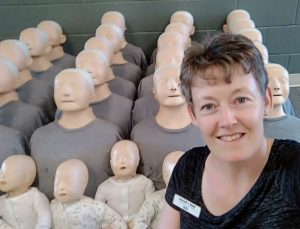
First aid instructor in foreground with CPR manikins behind

Gill McCulloch, Owner, Safe + Sound First Aid Training Ltd.


Take a first aid course and learn to save a life.


Happy Holidays from Safe + Sound, and Thank You!

To our dedicated team of highly experienced instructors

We see and appreciate how much energy you put into your teaching and professional development. We love how you care for our clients with patience and kindness.

To the employers and agency case managers who have trusted us to train their staff and clients

We acknowledge you for seeing the value in safety training. We respect that you show your team members that you care about their safety by investing in first aid and mental health first aid training. Your workplace is safer because you give your people time off to take classes and learn first aid and safety skills. The families of your workers are confident that their loved ones will come home safely at the end of the day.

To our community champions and supporters, including the Tri-Cities Chamber of Commerce and its members

The Chamber is an organization that provides an excellent platform from which local businesses can network and learn while providing support and celebrating each other’s achievements. We appreciate all of the great friendships we have made with fellow business owners and also the referrals you send our way!

To our course attendees and all of the people who post good reviews about Safe + Sound

Thank you for your lovely positive feedback and for registering your family members on our courses. It makes us happy to know that you and your families are safer because of the skills you learn in our courses. We look forward to seeing you again when it’s time for a refresher.

Special thanks to the new immigrants and refugees

You have taken a leap of faith and courage to tackle a Red Cross class in a language that many of you are still learning, and we have the greatest admiration for you. We know how much a Red Cross certification means to you. We’ve seen your tears of joy and celebrated with you when you discover that you’ve passed your course. We know that you may be depending on this certification so that you can work and put food on the table for your families. We wish you happiness and success in your new life in Canada.

To everyone who is involved with Safe + Sound First Aid Training

Thank you for helping us to provide a much-needed service in our community. We appreciate you all very much and wish you a safe and happy time with your family and friends over the holidays.

Gill McCulloch, Director,
Safe + Sound First Aid Training Ltd.
learnfirstaid.ca

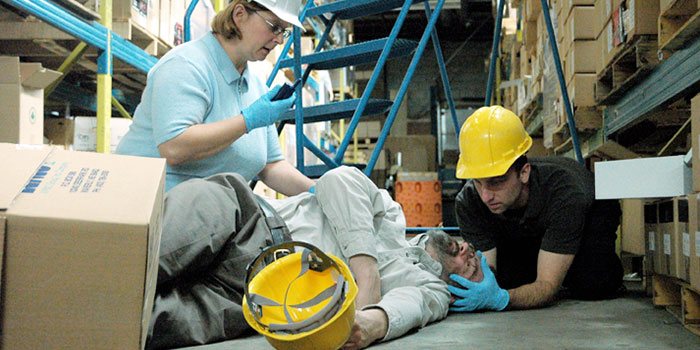
workers providing first aid to injured co-worker

Why get staff trained in first aid?

There are more advantages than you might think.

Most conscientious employers have “Get staff trained in first aid” somewhere on their to-do list. How high up this item appears on the list may depend on their previous experience of accidents and injuries in the workplace or knowledge of the advantages of first aid training.

Safety Training Makes Sense

In workplaces, where employees have suffered severe injuries or death, employers have learned from bitter experience that safety should always be the number one priority. Think about it, if your staff members are trained to check for dangers and deal with hazards, there will be fewer accidents and injuries at your workplace and less downtime. Also, you’ll likely see a boost in morale as workers are happier and more productive if they feel like employers care about their safety.

What about the bottom line?

As well as the human suffering that often results from serious accidents, there will also be an impact on the bottom line. Employers often make decisions based on savings in time and money. If you’re asking yourself the question, “Will getting my staff trained in first aid save me time and money?” the answer is yes!

Don’t learn the hard way

Employers don’t have to learn about the advantages of safety and first aid training the hard way, though. All they need to do is be smart about safety training and practices and make arrangements for their staff to get trained through a recognized course provider.

Online or Classroom Training?

All employees need safety training. Workers can complete some of this online, but for first aid, you need to send your people to a classroom-based course. With first aid and CPR training, there is no substitute for getting hands-on experience working with a CPR mannequin, AED and other first aid equipment and supplies. In a classroom setting, participants get expert instruction and direct feedback from a certified instructor.

Use the Services of a recognized Training Provider

The Canadian Red Cross has been offering first aid and CPR training to Canadians for over 50 years and is one of the leading providers of first aid and CPR programs in Canada. Safe + Sound First Aid Training is proud to have been a Canadian Red Cross Training Partner since 1999. The Red Cross courses and certifications we offer are nationally recognized and accepted in BC by Child Care Licensing, Adult Care Licensing and WorkSafeBC.

Eight reasons to get your staff trained in first aid & CPR

  1. It saves lives!
  2. It will save you money. Less downtime = increased productivity.
  3. Your workers will be safer in and outside of the workplace.
  4. Employees will be able to act quickly, confidently and effectively in emergencies.
  5. Your worker safety and insurance board will be pleased with you.
  6. It’s a great team-building exercise.
  7. You’ll see an increase in morale; people like to work for employers who care about their safety.
  8. You’ll have one less thing on your “to-do” list, and maybe you’ll sleep better at night.

Group First Aid Training is Easy to Organize

Providing first aid and CPR training for employees is a smart, low-cost investment that helps ensure workplace health and safety. If you’re thinking about organizing first aid and CPR training in your workplace, please contact us, or complete our Group Training Form and we’ll be happy to help.

Gill McCulloch

Safe + Sound First Aid Training

learnfirstaid.ca

604-945-7277