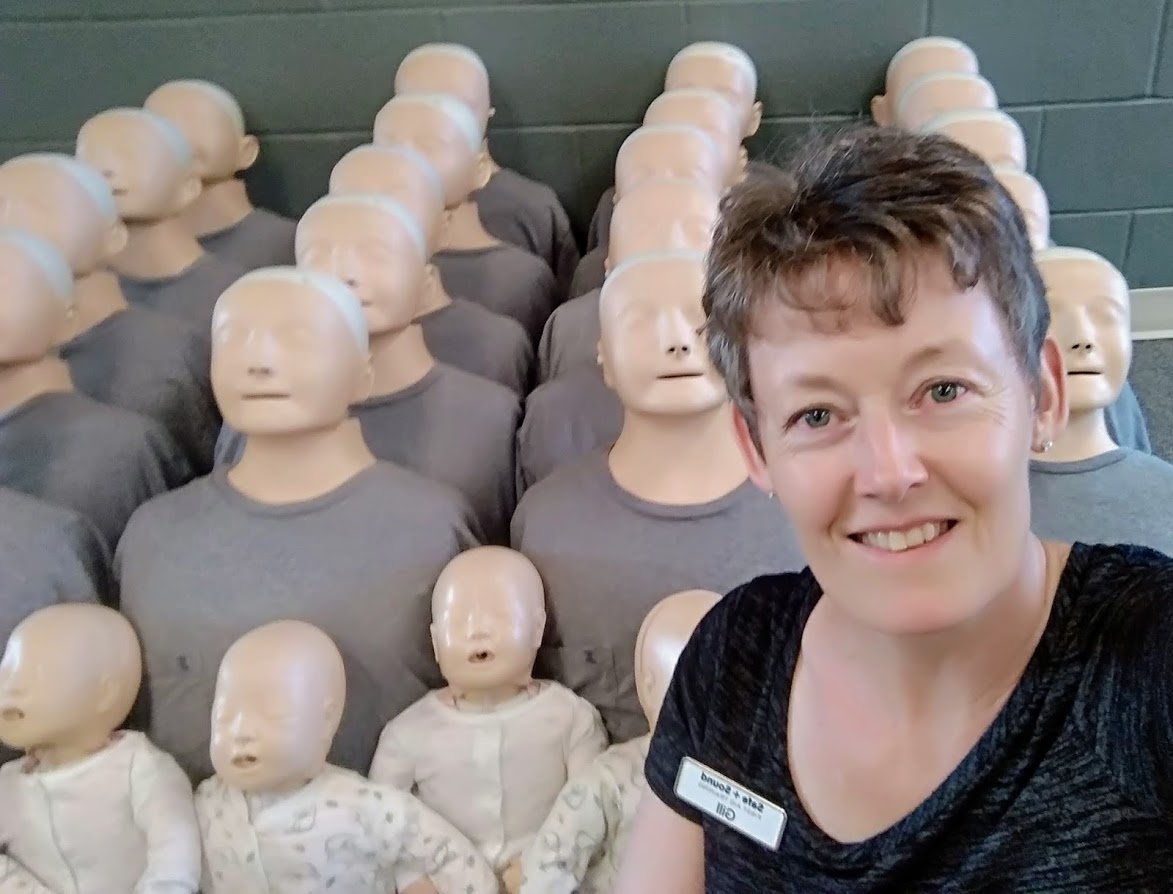
Why smart employers provide Mental Health First Aid Training in the workplace

The Cost of Mental Illness in Canada

According to the Centre for Addictions and Mental Health (CAMH) the economic burden of mental illness in Canada is estimated at $51 billion per year. This includes health care costs, lost productivity, and reductions in health-related quality of life.

  • Individuals with a mental illness are much less likely to be employed. Unemployment rates are as high as 70% to 90% for people with the most severe mental illnesses.
  • In any given week, at least 500,000 employed Canadians are unable to work due to mental health problems. This includes:
    • approximately 355,000 disability cases due to mental and/or behavioural disorders plus
    • approximately 175,000 full-time workers absent from work due to mental illness.
  • The cost of a disability leave for a mental illness is about double the cost of a leave due to a physical illness.
  • A small proportion of all health care patients account for a disproportionately large share of health care costs. Patients with high mental health costs incur over 30% more costs than other high-cost patients.
  • A growing body of international evidence demonstrates that promotion, prevention, and early intervention initiatives show positive returns on investment.

Why smart employers provide Mental Health First Aid Training in the workplace

Key findings from a Pan-Canadian Survey conducted by the Canadian Mental Health Association show that ‘Mental Health First Aid’ is by far the resource most known by respondents.

The most effective tools according to respondents are CMHA workplace mental health workshops, Workplace Strategies for Mental Health (free online resources), and The National Standard of Canada for Psychological Health and Safety in the Workplace. Respondents indicate that the best methods for learning about workplace mental health tools and resources are through in-person seminars, workshops and presentations.

Respondents indicate the need for more education about the tools and resources that exist to support workplace mental health. Also needed are organizational cultural shifts that exemplify acceptance of mental health concerns as a legitimate health issue.

Contact us today for information about onsite Mental Health First Aid training in your workplace.

What are the first aid requirements for my workplace?

First Aid Requirements in the Workplace

Employers are responsible for first aid in the workplace. To determine the first aid requirements of your workplace, first you’ll need to do an assessment. Then, you can review the findings and take necessary steps to put proper first aid procedures in place. If you’re an employer, you are responsible for first aid in the workplace.

First aid in the workplace is about providing workers with prompt, easily accessible, and appropriate first aid treatment. Depending on your workplace, you might need some or all of the following:

  • Occupational first aid attendants with the training appropriate for the type of workplace, number of workers, and time to a hospital.
  • Proper facilities, such as first aid rooms or dressing stations.
  • First aid kits with appropriate types and quantities of supplies.
  • A record-keeping system so incidents can be logged.
  • Appropriate means of transporting injured workers to medical aid.
  • Effective means of communication between first aid attendants and workers served, and for the first aid attendant to call for assistance.
  • Conduct a first aid assessment

To determine an adequate and appropriate level of first aid coverage, the first step is a first aid assessment. This doesn’t need to be complicated. But it does call for a full review of your workplace. The assessment will help you determine the minimum level of first aid needed in your workplace. First aid levels are outlined in the OHS Regulation Schedule 3-A: Minimum Levels of First Aid.

Steps to first aid assessment can be found on the WorkSafeBC website

I’m interested in Onsite Level 1 Training at my workplace

I’d like to register my workers on a Level 1 course in Coquitlam

2016_02_13-sumac-students-at-erbf-3 2016_02_13-sumac-students-at-erbf-2 2016_02_13-sumac-students-at-erbf-7

Onsite First Aid Training in Metro Vancouver

Do your staff need first aid training?

We do onsite first aid training in workplaces in Metro Vancouver.  We can teach a class in the convenience of your own venue, or you can book a private course at our Coquitlam location. Private group training is easy to very organize. Just book a date with us and provide a group of people and we’ll take care of everything else!

We will come out to your location in the Tri-Cities (Coquitlam, Port Coquitlam and Port Moody) Surrey, Richmond, Burnaby, New Westminster, Vancouver, North Vancouver, Maple Ridge, Pitt Meadows, Abbotsford or Langley.

The Venue

The training room should be clean and contain enough seating for the number of people attending as well as adequate clear floor space for the practical sessions. Please see guidelines below. There must be washrooms nearby.

Training room size

Red Cross minimum room size requirements: 1.4 m2 (15 sq. ft.) available for every 2 participants.

For Level 1 (Workplace Emergency First Aid) courses, WorkSafe BC requires a minimum of 500 sq ft of clear floor space in addition to the seating area.

First Aid Class Group Size

Red Cross First Aid/ CPR courses:

Maximum number of students per class = 18

Minimum number of students you will be invoiced for = 10


Mental Health First Aid courses:

Maximum number of students per class = 24

Minimum number of students you will be invoiced for = 10

Special arrangements can be made for smaller or larger groups.

Don’t have a suitable training room onsite?

No problem! We can teach your group at our Coquitlam location or you can register your staff members on one of our public courses. You can find our public course schedule at staging-wp123859.wpdns.ca

First Aid in Farsi?

Our public courses are usually conducted in English, however we have an Iranian instructor who can teach first aid and CPR classes in Farsi. We’d be happy to arrange a private course for your group conducted in Farsi.

Ready to book your private group course?

For more information, or to make arrangements for your onsite first aid training, please contact us. To help us to serve you better, please give us the following information if you can:

  • Which course do your staff members need to take?
  • Would you like us to teach the class at your workplace or our classroom in Coquitlam?
  • Which day of the week is most convenient for you?
  • Do you have any dates in mind for your training? Please give a two or three alternate dates and indicate your preference.
  • Would you prefer to be contacted by phone or email?

Contact us today to book a private first aid class for your group!
Call 604-945-7277 and speak to Gill, or email info@learnfirstaid.ca

View of person from behind with brain inflamation

Having a stroke more than doubles your risk of developing dementia


A new report from the Heart & Stroke Foundation shows that having a stroke more than doubles your risk of developing dementia – all the more reason to adopt a healthy lifestyle now and get stroke victims to hospital as soon as possible.

If you suspect someone is having a stroke call EMS/911 immediately and request an ambulance. The person needs medical attention as fast as possible. Do not drive them to the hospital yourself.

If the person is having a stroke that’s caused by a blood clot they can be given clot busting medication that can stop the stroke by breaking up the blood clot. The medication must be given as soon as possible and within 4½ hours after stroke symptoms start. Receiving this medication in time can reduce the severity of a stroke and reverse some of the effects, helping the person recover more quickly.

Stroke and Dementia by the numbers:

  • 1.9 million brain cells die every minute after a stroke.
  • 405,000 Canadians are living with the effect of stroke.
  • 1 in 3 Canadians who will develop stroke, dementia, or both.
  • 1/3 of dementia risk can be attributed to stroke.
  • 9 in 10 Canadians have at least one risk factor for stroke and heart disease.

Signs of stroke include F.A.S.T.

FACE – Is it drooping?
ARMS – Can you raise both?
SPEECH – Is it slurred or jumbled?
TIME – to call 9-1-1 right away

Take a Red Cross first aid & CPR course and learn how to care for a person suffering from a stroke or heart attack. Check out our course list here.

Safe + Sound is now a Red Cross Disaster Management- First Aid Training Provider!

CRC Disaster Response Thailand

We are now providing first aid training free of charge to Red Cross Disaster Response Personnel, operators of Red Cross vehicles and other Red Cross volunteers and staff.

Safe + Sound has been a Red Cross Training Partner since 1999 providing first aid & CPR training in the Metro Vancouver Area. It is an honour to be associated with an organization that provides such valuable support and relief to the most vulnerable people around the world.

One of the fundamental principles of the International Red Cross and Red Crescent Movement is Impartiality. Red Cross makes no discrimination as to nationality, race, religious beliefs, class or political opinions. It endeavours to relieve the suffering of individuals, being guided solely by their needs, and to give priority to the most urgent cases of distress.

To learn more about how the Red Cross responds to disasters around the world please visit redcross.ca

GHS WHMIS 2015

GHS WHMIS 2015 – Are your employees up to date?

GHS WHIMIS 2015 is the newly updated version of  WHMIS. The course now includes new international guidelines. Your employees can take GHS WHIMIS 2015 online in 1 hour and print their own certificate. Course fee: $29.95. Register now for GHS WHMIS 2015

What is WHMIS?

The workplace Hazardous Materials Information System commonly known as WHMIS, is Canada’s hazard communication standard. It is a comprehensive system for providing information on the safe use of hazardous materials in Canadian workplaces.

 The key elements of the system include:

  • Cautionary labelling of containers of WHMIS controlled products and hazardous products
  • Provision of MSDS (Material Safety Data Sheets) or SDS (Safety Data Sheets)
  • Implementation of worker education programs.

What is GHS?

The Globally Harmonized System (GHS) of classification and labelling of chemicals  is an international initiative to standardize chemical hazard classification and communication globally.

GHS has not replaced WHMIS. WHMIS has incorporated GHS elements, resulting in a new standardized:

  • Classification criteria
  • Label requirements
  • Safety Data Sheets (SDS) requirements (formerly material safety data sheet)

Register now for GHS WHMIS 2015

The man with the blanket

In this last month I’ve given first aid three times – to a friend with a head injury that required seven stitches, to a woman who fell off the treadmill and hit her head at my gym and a dog who was hit by a car near Coquitlam Town Centre park. In all three situations other people rushed in to help and it was a good reminder about how important teamwork is in an emergency situation. If you’re involved in an emergency situation, look around you. Is there anyone that can help? Don’t be shy about asking. Most people want to help but often they’re not sure what to do.It’s great if you have first aid training but even if you don’t, here are some things you can do:

  • Call 911 and ask for an ambulance. Don’t hang up until they tell you to.
  • Get someone to meet the first responders and guide them to the injured person.
  • Comfort and reassure the injured person – treat them as you’d like someone to treat you.
  • Find a first aid kit and bring it to the scene.
  • If the person is cold and shivery, cover them with a blanket or jacket.
  • Make them as comfortable as you can – preferably without moving them.

Of the three situations I was involved in the injured dog was the most traumatic. The dog, a beautiful husky had run onto the road and was hit by a car and rolled underneath it. It was in terrible pain and we did what we could to comfort it while calling for help. The local animal shelters were unable to pick up the dog so eventually the owner had to transport it in his car. While we were struggling to slide the thrashing, squealing dog onto a mat in order to lift it into the car, a man who had witnessed the accident came over and gave the dog’s owner a beautiful soft blanket to cover the dog, wished him well and walked away.

It is very touching to witness the kindness of strangers. This man didn’t want or expect any thanks he just saw a need and did something to help. Even though it’s highly unlikely he will see my post, I just wanted to say “Thank you” to him.

Gill McCulloch


First aid training

Will I get sued if I give first aid to an injured person?

Many people fear being sued for coming to the aid of someone with an injury. This same fear often prevents people from getting trained in first aid. The clear message in the parable of the Good Samaritan is that assisting those in trouble is the right thing to do.

There is no general legal duty to help someone in an emergency except for a person who is involved in a motor vehicle accident. That person must stop and give all possible assistance to the persons involved. A failure to do so could mean being charged under the criminal code.

The law in every province in Canada encourages bystanders to give first aid. In BC, we have the Good Samaritan act. It specifically protects, against liability, citizens and medical professionals who act in good faith to give emergency assistance to ill or injured persons at the scene of an emergency. Under these laws, a person providing first aid who acts reasonably and prudently under the conditions of an emergency cannot be held responsible for the injuries suffered by the victim.

You never know when you are going to be called upon to assist in an emergency situation. It could be today. Register for a course and learn how to save a life. If you’re not sure which first aid/CPR course to take, please give us a call and we’ll be happy to help. Tel: 604-945-7277.