Group First Aid Training at Your School – FAQ’s

Interested in private group First Aid & CPR training at your School? Here are some of the most frequently asked questions we get from Principals and teachers.

FAQ’s about Group First Aid Training at School.

Q: Which first aid/CPR class do teachers usually take?

A: Teachers usually take the one day Red Cross Emergency First Aid & CPR program. This includes CPR level C skills for all age groups (adult, child and infant). If time and budget allows, a more comprehensive option is the two day Standard First Aid & CPR program. Both courses are recognized by WorkSafeBC as equivalent to Occupational First Aid Level One.


Q: What is the course duration?

A: Red Cross Emergency First Aid is a one day course – 8 hours including breaks.

Red Cross Standard First Aid is a two day course – 16 hours including breaks.


Q: What is the course start time?

A: Most groups choose a start time of 8:30 or 9:00am. We are flexible, so let us know what works for your group. There are usually at least three refreshment breaks during the day including a 30 minute lunch break.


Q: What is the maximum number of participants per class?

A: On a Red Cross Emergency or Standard First Aid class, the instructor to participant ratio is 1:18 (one instructor per 18 participants). Special arrangements can be made for groups of 18+ people.


Scheduling a First Aid class at your school

Q: How far ahead do I need to book the class?

A: Safe + Sound takes course bookings up to 6 months ahead. The further ahead you book, the more chance that your preferred course date is available. Pro-D days are very popular for first aid/ CPR classes.


Q: Which days of the week are available for first aid classes?

A: The class can take place on a regular school day, Pro-D day, during the school holidays or on a Saturday. Let us know which dates work best for you and we will check our instructor availability.


Pricing and Payment

Q: What is the cost of onsite first aid training?

A: This depends on the number of course participants, the course you choose and your location. Please contact us for current pricing and ask us to provide a quote for your school or group.


Q: How can participants make their payments for the first aid course?

A: Option 1: Participants can register themselves online via a private link on Safe + Sound’s website.

Option 2: Safe + Sound can invoice the school for the full amount.


Q: What methods of payment do you accept?

A: We accept EFT, Visa, MasterCard and business cheques. We do not accept personal cheques.


Q: What does the first aid course fee include?

A: The course fee includes a Red Cross certificate and e-book.


Room and Equipment Requirements

Q: What are the training room requirements for a first aid class?

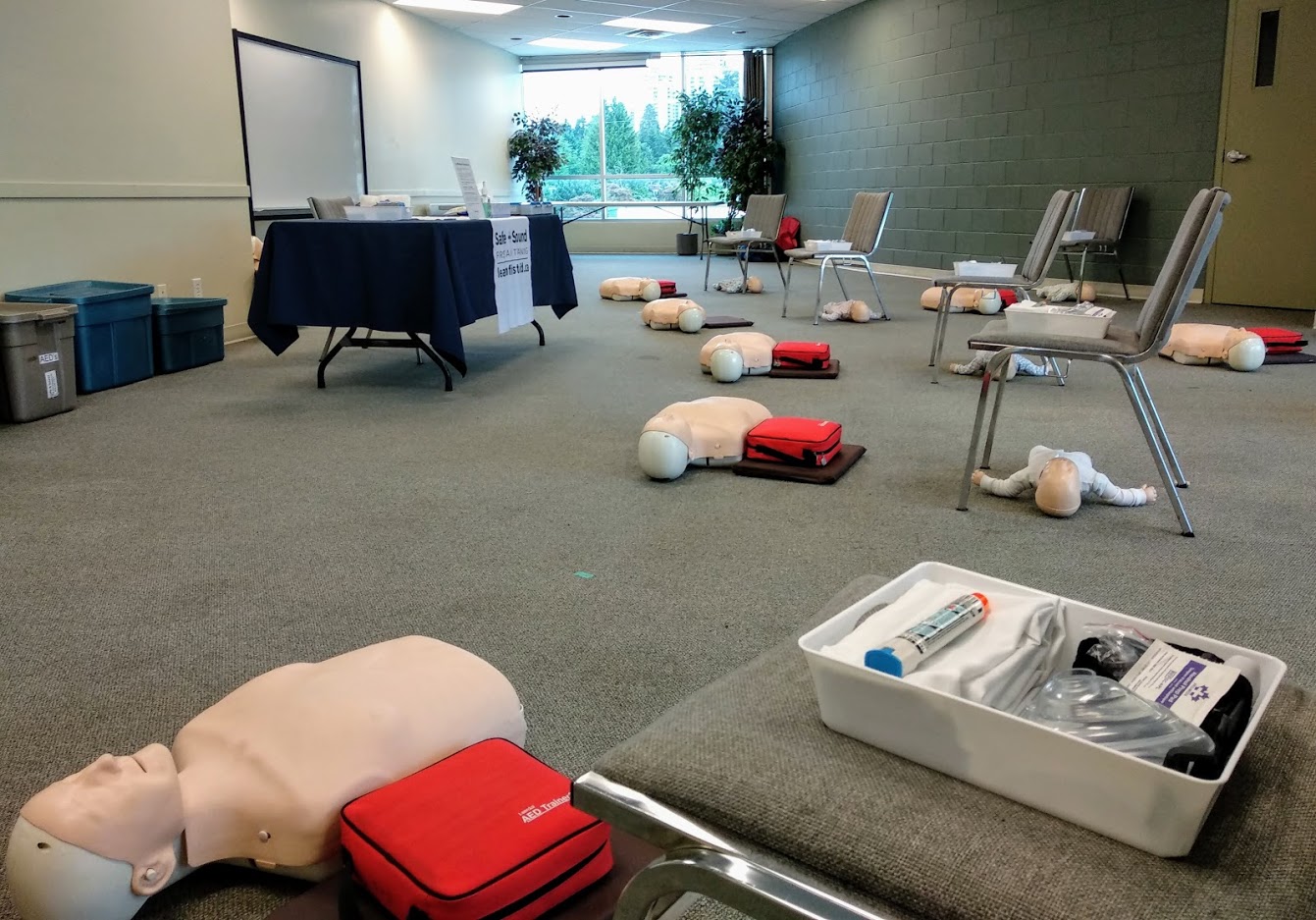
A: The room must have a minimum of 500 sq. ft. of clear floor space as well as a seating area, chairs for participants, a few tables and washrooms nearby.


Q: What are the equipment requirements for a first aid class?

A: Our instructor will bring everything they need to teach the course. If you are able to provide a whiteboard or blackboard, flip chart, projector or other AV aids that is very helpful and much appreciated, but not required.


Q: Can a first aid course be held in a regular school classroom?

A: It depends on the size of the classroom and the number of participants. There are lots of physical activities included in a Red Cross first aid class, so the more floor space, the better. A gym, multi-purpose room or library space works best unless the group is very small.


Q: We have a small group of people, can we still book a private class?

A: You can still book a private class, however if you have a small group (less than 12 people) you may prefer to register them on one of our public classes in Coquitlam or Burnaby:

View public first aid course schedules in Coquitlam and Burnaby:

Red Cross Emergency First Aid & CPR/AED Level C

Red Cross Standard First Aid & CPR/AED Level C


Q: Which school districts does Safe + Sound First Aid Training serve?

A: We run first aid classes in schools in the following BC school districts:

Coquitlam School District 43 – SD43

Maple Ridge – Pitt Meadows School District 42 – SD42

Burnaby School District 41 – SD41

New Westminster School District 40 – SD40

Vancouver School District 39 – SD39


Group First Aid Training  – Booking a Class for your School

For further information or a quote for a first aid class at your school, please fill in our Onsite Training Form We will then provide a quote or contact you if we need more information.

Private group first aid training is easy to organize. Book a date with us and provide a group of people. We’ll take care of everything else!

Red Cross Babysitting Training at your SD43 School – FAQ’s

Interested in hosting a Red Cross Babysitting class at your SD43 School?

If you’re a teacher or youth worker at an SD43 school, you may like to provide Red Cross Babysitting training for your students. Here are some of the most frequently asked questions we get from teachers and parents:

FAQ’s about hosting a Babysitting class

Q: How old do children have to be to take the Babysitting course?

A: Children must be 11 years of age or older (or must have completed Grade 5). The maximum age is 15 years.


Q: How long is a Red Cross Babysitting class?

A: A Red Cross Babysitting class is usually 8 hours long (7 hours of teaching time + breaks). There are usually at least 3 refreshment breaks during the day. Most classes start at 8:30 or 9:00am but we are flexible so let us know what works for your group.


Q: What is the maximum number of children in a Red Cross Babysitting class?

A: The instructor to participant ratio is 1:30 (one instructor per 30 participants). Special arrangements can be made for groups of 30+ children.

Scheduling a Babysitting class

Q: How far ahead do I need to book the class?

A: We take bookings up to 6 months ahead. The further ahead you book, the more chance there is that your preferred course date is available. Pro D days are very popular for Babysitting classes.


Q: On which days of the week can a Babysitting course be held?

A: The class can take place on a regular school day,  Pro-D day, during the school holidays or on a Saturday. Let us know which dates work best for you and we will check our instructor availability.


Babysitting Course Cost and Payment

Q: What is the cost of onsite Babysitting training?

A: Please contact us for current pricing and ask us to provide a quote for your school.


Q: How can families make their payments for the Babysitting course?

A: Option 1: Children can be registered online via a private link on Safe + Sound’s website.
     Option 2:  The school can collect payments and be invoiced by Safe + Sound.


Q: What does the course fee include?

A: The Babysitting course fee includes a Red Cross Babysitting book, participation certificate and mini first aid kit.


Training Room and Equipment Requirements

Q: What are the training room and equipment requirements for a Babysitting class?

A: The room must have some clear floor space as well as a seating area,  chairs for participants, a few long tables, whiteboard or blackboard, flip chart.


Q: Can a Babysitting course be held in a regular school classroom?

A: It depends on the size of the classroom and the number of participants. There are lots of activities included in a Red Cross Babysitting class so the more floor space, the better. A gym, multi-purpose room or library space works best.


Q: What are the qualifications of a Red Cross Babysitting course instructor?

A: The Babysitting course instructor is a certified Red Cross Youth Leader.

Red Cross Babysitting Course Content

Q: What topics are included in a Red Cross Babysitting class?

In a Babysitting class children learn how to:

  • Look after babies, toddlers, preschoolers and school-age children.
  • Care for himself/herself and siblings when home alone.
  • Create a safe environment, and deal with phone calls and unexpected visitors.
  • React confidently in case of an emergency, such as choking, bleeding, poisoning or burns.
  • Cope with common problems, such as tantrums and crying.
  • Play games and organize activities to keep kids of all ages entertained.
  • Manage a babysitting business. This includes creating a resume and a business card and asking the right questions before accepting a babysitting job.

First Aid Content includes:

  • Check, Call, Care (includes phoning EMS/911)\
  • Glove removal
  • Recovery position
  • Conscious choking (adult/child/baby/alone)
  • CPR (baby/child)
  • Illness
  • Asthma (includes use of inhaler and spacer)
  • Anaphylaxis (includes use of EpiPen)
  • Poisoning
  • Insect stings
  • Wound care (i.e. minor cuts and scrapes, splinters, nosebleeds, bumps and bruises
  • Life-threatening bleeding, burns)
  • Head, neck and back injuries
  • Broken bones
  • Seizures

Booking a Red Cross Babysitting Class for your school

For further information or a quote for a class at your school, please contact us

If you have a small group (less than 10 children) you may like to consider registering them on one of our public Babysitting classes in Coquitlam:

View Public Babysitting course schedule, Coquitlam

Book a class today and help children build valuable skills for a lifetime. Read 11 year old save’s mom with Red Cross Babysitter Training

A first aid instructor kneels near a student giving instructions during a first aid class.

First aid & CPR certification – time to update?

Do your staff members need to update their first aid & CPR certifications?

Are you responsible for staff safety training at your workplace?

Do you find it hard to keep track of who needs training and which staff members have to update their certificates?

What gets in the way of having your staff trained?

  • Time?
  • Budget restrictions?
  • No training room?
  • Confusion about which courses your team members need?
  • Lack of knowledge, about the differences between courses/providers?

If you’ve answered “yes” to any of these questions, you need our services!

Safe + Sound is a Training Partner for the Canadian Red Cross First Aid Program. With 26+ years experience in the first aid training industry and over 50,000 satisfied clients, we are well qualified and equipped to get your staff trained and certified. If it’s time for your team to update their certifications, let’s chat!

Group training is easy to organize. All you need to do is book a date for your class at our location or yours and provide a group of people. We’ll do the rest.

We can come out to your location with all the necessary equipment and supplies and conduct the training for your group. If you don’t have a suitable training room or area onsite, we can teach the class at one of our classrooms in Coquitlam or Burnaby/Vancouver. Our centres have kitchen facilities, free parking and WIFI and are close to public transport.

Benefits of Group Training

  • Courses can be tailored to meet the needs of your group.
  • Our instructors can include industry-specific first aid scenarios on request.
  • Group first aid training is a great team building opportunity.

Request a quote for Group First Aid Training

If you’re thinking about booking a group first aid training session in the Tri-Cities or Metro Vancouver, please fill out our inquiry form. We’ll be happy to send you the information you need and provide a quote.

Safe + Sound has been conducting group first aid training for 20 years. Here are some of the most frequently asked questions we’ve received regarding group first aid training:

Private Group First Aid & CPR Training – FAQ’S

Training Room Requirements 

Q: What are the room / space requirements for private group first aid training?

A: To meet WorkSafeBC requirements, the training room must have a minimum of 46.5 sq. metres (500 sq. feet) of clear working space in addition to the seating area per class of 10-18 candidates. For classes with fewer than 10 candidates, the room must be equal to 4 sq. metres (44 sq. feet) per candidate. The instructor must have an unobstructed view of the candidates during the training and / or evaluation.

Q: What if we don’t have a suitable training room onsite?

A: You can book a private course for your team at one of our classrooms in Coquitlam or Burnaby/Vancouver.

Choosing the right first aid course/certification

Q: Which first aid course or certification do my staff members need?

A: If you’re not sure which first aid course or certification your staff members need to meet industry and work safety requirements, we can help.

Q: Which group first aid training classes does Safe + Sound Offer?

A: Safe + Sound offers the following group first aid training classes:

  • Standard First Aid & CPR/AED Level A
  • Standard First Aid & CPR/AED Level C
  • Intermediate First Aid Aid
  • Emergency First Aid & CPR/AED Level A
  • Emergency First Aid & CPR/AED Level C
  • Basic First Aid
  • Emergency Child Care First Aid & CPR/AED Level B
  • CPR/AED level A
  • CPR/AED level C
  • Mental Health First Aid

Group Size – Private Group First Aid Training

Q: What is the minimum number of students for a group first aid class?

A: For Red Cross First Aid & CPR certification classes we will invoice for a minimum of 10 participants to cover costs. If you have a smaller group, you may prefer to register your people on one of our public classes.

Q: What is the maximum number of students for a group first aid class?

A: For Red Cross First Aid & CPR certification classes, the maximum number of participants is 18 per class. For Basic Life Support (BLS) the maximum is 12.

Q: What is the minimum number of students for a group Mental Health First Aid class?

A: First Mental Health First Aid classe,s we will invoice for a minimum of 18 participants. Additional participants will be charged on an individual rate.

Q: What is the maximum number of students in a Mental Health First Aid class?

A: The maximum number of participants in a Mental Health First Aid class is 25.

Q: How much does group first aid training cost?

A: To provide a quote, we will need the following information:

  • Your business location
  • The certification your staff members need. Ask if you’re unsure.
  • Number of people who need training

Q: What methods of payment do you accept for group first aid training?

A: We will send you an invoice with your booking confirmation.

Course days and dates

Q: Which days of the week are available for private group training?

A: We can run a class on any day of the week, and dates are subject to availability. Saturdays are the most popular day for first aid training. We recommend booking your class a few weeks before first aid certifications are due to expire. We take bookings up to 6 months ahead.

If your staff members need to update their first aid certifications, plan ahead and book the training now before their certificates expire.

Contact us today. We can help. It’s easier than you think!

Happy Asian family at home. Mother feeding solid food to 9 months old baby boy in the kitchen, living lifestyle indoors.

Home Alone and Babysitting in BC – FAQ’s

Safe + Sound has been running the Canadian Red Cross Babysitting program for 20+ years in Coquitlam, BC. Here are some of the most frequently asked questions we get from parents and caregivers about kids babysitting and being home alone.

Q: What is the legal age to babysit in BC?

A: There’s no minimum legal age for when children can become babysitters in Canada, and it’s not uncommon for them to start as early as 12 years old. Many people believe that the legal age is different when you are babysitting brothers and sisters. This is not the case.

Q: What is the legal age to leave a child at home alone in BC?

A:  In British Columbia, there is no legislated minimum age for leaving a child alone for a short period. However, according to a B.C. Supreme Court decision, children under the age of 10 should not be left unsupervised at home. Read more: https://bit.ly/2Cqc4X3

Q: What kind of training can kids do to prepare themselves to babysit?

A: The Canadian Red Cross offers a babysitting course for kids between 11 and 15 years old. The program is focused on child care, first aid, injury prevention, leadership and business skills.

Q: What do kids learn on a Red Cross Babysitting course?

A: A Red Cross Babysitting Course includes the following topics:

  • How to be responsible and demonstrate leadership
  • How to make good decisions and manage difficult behaviours
  • Information on children’s developmental stages and specific strategies for each stage
  • How to feed, diaper, dress and play with children and babies
  • How to recognize and prevent unsafe situations, make safe choices and promote safe behaviours
  • First aid skills
  • The business of babysitting

Q: What age do kids have to be to take a Red Cross Babysitting course?

A: Children need to be 11-15 years of age or have completed Grade 5.

Q: When a child has taken the Babysitting course will they be qualified to babysit?

A: A child will gain useful skills and knowledge on the Babysitting course. After the class, they will be more prepared and confident to babysit. The Babysitting course is a participation class. There is no testing of skills and therefore no “qualification” Whether or not the child is ready to take on the responsibility of babysitting is left to the discretion of the child’s parent or guardian. There is no such thing as a “babysitter’s license” for kids.

Q: What are the qualifications of the babysitting course instructor?

A: To teach the Canadian Red Cross Babysitting program, you must be a certified Red Cross Youth Leader. Many Youth Leaders are also Red Cross First Aid instructors.

Q: Is the Red Cross Babysitting course appropriate for child care workers and adult babysitters?

A: No – the Babysitting course is designed for 11-15 year olds. If you are a child care worker or an adult who babysits children, we recommend you take the Red Cross Emergency Child Care First Aid & CPR Level B course.

Q: Where can I find more information about Red Cross Babysitting courses?

A: Follow this link to the Babysitting information page on our website. You can also find course information on the Canadian Red Cross website.

We look forward to meeting your child and their friends soon!

Babysitting course SD43

September 20 2019, Pro D Day Babysitting Class, Coquitlam. Register today! 

Why register your child for a Babysitting course?

Are you worried when you leave your older child at home alone with their younger siblings? If you’d like your 11-15 year old to learn babysitting skills and how to be safer when home alone, register them on our Red Cross Babysitting class on September 20 2019 in Coquitlam. You can Register online or call 604-945-7277.

What will your child learn in a Babysitting class?

Your child will learn how to:

  • Look after babies, toddlers, preschoolers, and school-age children.
  • Care for himself/herself and siblings when home alone.
  • Create a safe environment, and deal with phone calls and unexpected visitors.
  • React confidently in case of an emergency, such as choking, bleeding, poisoning or burns.
  • Cope with common problems, such as tantrums and crying.
  • Play games and organize activities to keep kids of all ages entertained.
  • Manage a babysitting business. This includes creating a resume and a business card and asking the right questions before accepting a babysitting job.The Canadian Red Cross Babysitting course now has a greater emphasis on First Aid skills. The course covers everything from managing difficult behaviours to essential content on leadership and professional conduct as a babysitter. Babysitting promises to deepen and enhance the responsibility that older youth feel when caring for younger children. This updated curriculum, complete with new science, also provides improved learning when it comes to giving the appropriate care in the event of an emergency.

Babysitting Course First Aid Content includes:

  • Check, Call, Care (includes phoning EMS/911)
  • Glove removal
  • Recovery position
  • Conscious choking (adult/child/baby/alone)
  • CPR (baby/child)
  • Illness
  • Asthma (includes use of inhaler and spacer)
  • Anaphylaxis (includes use of EpiPen)
  • Poisoning
  • Insect stings
  • Wound care (i.e. minor cuts and scrapes, splinters, nosebleeds, bumps and bruises
  • Life-threatening bleeding, burns)
  • Head, neck and back injuries
  • Broken bones
  • Seizures

Babysitting course details, Coquitlam

Registration: Register online or call 604-945-7277

Cost: $70.00+GST per person

Course location: 
Public Babysitting classes take place at Eagle Ridge Bible Fellowship, 1160 Lansdowne Drive, Coquitlam, BC, V3B 5V8

Private group Babysitting classes: Book a class for your group at our Coquitlam location or your venue in Metro Vancouver

Babysitting Course Instructor: Certified Red Cross Youth Leader

Prerequisites: Child must be 11-15 years old or have completed Grade 5

Register for September 20 2019 Babysitting course, Coquitlam

2019 September 20 Pro-D Day Babysitting course printable flyer

View Babysitting course schedule, Coquitlam

Register today and help your child build valuable skills for a lifetime.

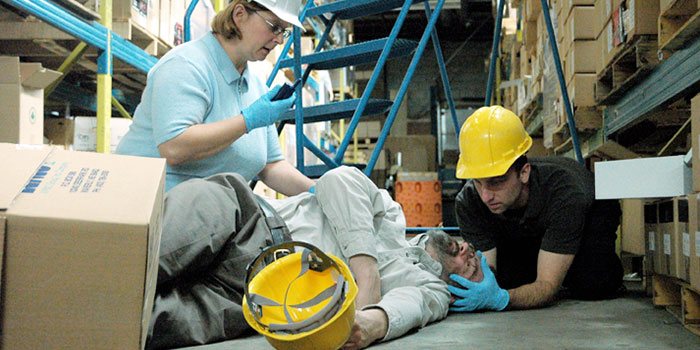
workers providing first aid to injured co-worker

Legal Issues Around First Aid

Can I be sued for giving first aid?

Many people fear being sued for coming to the aid of someone with an injury. This same fear often prevents people from getting trained in first aid. You’ve probably heard the parable of the Good Samaritan. The clear message in this story is that assisting those in trouble is the right thing to do.

The law in every province in Canada encourages bystanders to give first aid. In BC, we have the Good Samaritan Act. It specifically protects, against liability, citizens and medical professionals who act in good faith to give emergency assistance to ill or injured persons at the scene of an emergency. Under these laws, a person providing first aid who acts reasonably and prudently under the conditions of an emergency cannot be held responsible for the injuries suffered by the victim.

There is no general legal duty to help someone in an emergency except for a person who is involved in a motor vehicle accident. That person must stop and give all possible assistance to the persons involved. A failure to do so could mean being charged under the criminal code.

First aiders must:

–          Get permission, if possible before giving care

–          Give only the care they were trained to provide

–          Continue giving care until another trained person takes over, they are too exhausted to continue, the scene becomes unsafe, or the person’s condition improves and care is no longer required.

Getting Permission to Help an Injured Person

–          For an unresponsive person, the law assumes you have permission

–          For a young child without a caregiver, provide care.

–          If a person refuses care call EMS/911 and stand by if it is safe to do so.

Duty to report Child Abuse or Neglect in Canada

Every adult in Canada has a legal duty to report child abuse or neglect, even if it is not confirmed. Information about how to report details can be found in your jurisdiction’s child protection act, but the duty to report is uniform in all acts. If you think a child is being harmed, then a report to child protection and /or the police needs to occur.

You never know when you are going to be called upon to assist in an emergency situation. It could be today.

Safe + Sound provides the following Red Cross courses:

Standard First Aid & CPR/AED (OFA Level 1 equivalent)

Emergency First Aid & CPR/AED (OFA Level 1 equivalent)

Emergency Child Care First Aid & CPR/AED Level B

Babysitting (for 11-15 year olds)

and Online Safety Training

Check our online course library

If you’re not sure which first aid/CPR course to take, please contact us and we’ll be happy to help.

Book a private class for your team or register for a course today.

Learn to save a life.


injured worker lying slumped against wall with person giving first aid.

Basic Life Support (BLS) – 2019 Update and FAQ’s

Red Cross recently launched the Basic Life Support Program. Development of this course was driven by industry audiences and the need for a clear distinction from public (or lay) CPR courses. Health care provider audiences require a professional, skills-driven resuscitation course that recognizes requisite knowledge.

BLS – Frequently asked questions

Q. What is Basic Life Support?
A. Basic Life Support (BLS) is the recognition of, and initial intervention or treatment given by pre-hospital or in-facility responders to, a patient suffering from cardiac arrest or respiratory arrest.

Q. Is BLS just a different name for CPR HCP (Health Care Provider), or are HCP and BLS completely different?
A. BLS is a new course that is vastly different from HCP, from the target audience to the curriculum and content. BLS is focused on high performance resuscitation and professional skills and does not provide prevention education and address other first aid components as was the case in our HCP curriculum.

Q. Why is Red Cross sunsetting HCP? 
A. BLS training supersedes CPR HCP training. The introduction of BLS means CPR HCP is no longer needed – audiences who previously requested the CPR HCP Course will either take CPR C or BLS training depending on the skills needed.

Q: Is Red Cross Basic Life Support (BLS) a nationally recognized program?
A: Yes, the BLS certification is recognized across Canada.

Q: Who is the BLS course designed for?
A: This course is designed for healthcare providers and trained first responders who provide care to patients in a wide variety of in-facility and prehospital settings or by those that require BLS certification and CPR training to enter into a healthcare-related training program.

Q: What do students learn on a BLS course?
A: The primary goal of BLS is to give professional responders the fundamental skills needed to sustain life with CPR/Rescue Breathing and restore an effective rhythm with use of an AED. Follow this link and click View Course Details for more info and list of topics.

Q: Who is the Basic Life Support (BLS) Recertification course for?
A: The Basic Life Support (BLS) Renewal course is a fast-paced course that allows the experienced BLS provider (those who are confident in their BLS skills through regular use in their work in the ED, CCU, ICU on code team, or paramedics and first responders) the opportunity to demonstrate knowledge through written and skills assessment in a concentrated program. Successful completion of this two hour 15 minute course (approximate time) allows students to renew their BLS course completion card.

Q: How long is a BLS certificate good for?
A: A Red Cross BLS certificate is good for 1 year.

Q. Why is BLS only a one-year certification?
A. One year is the industry standard for BLS due to the high skill competency required. Resuscitation skills deteriorate over time and professional responders working in a team environment must know all positions and the skills within those positions. In a cardiac arrest event, any team member may be assigned to any role and must be competent to fulfill their duties.

Q. How long is the BLS Course?

A. BLS on its own is four hours of instructional time, with one additional hour for each of Airway Management and Oxygen Therapy certifications. The focused course allows for a shorter time frame and more flexible scheduling options.

Q. Is there a BLS Recertification Course? If so, how long is it?
A. Yes, there is a BLS Recertification Course and it is two hours of instructional time. If the participant has Airway Management and/or Oxygen Therapy certification(s) as well, they may recertify those at the same time. Additional time is needed to complete the Airway Management and/or Oxygen Therapy certification(s).

Q. Is there a minimum age for BLS participants?
A. There is no minimum age requirement. Participants must be able to successfully demonstrate skill competency.

BLS Training for Private Groups in Metro Vancouver

Book a private group BLS class for your team at your location or ours or register your staff on one of our public BLS classes in Coquitlam.

Questions? Email info@learnfirstaid.ca or call 604-945-7277

Babysitting in BC and Kids at Home Alone – FAQ’s

Safe + Sound has been running the Canadian Red Cross Babysitting program for 19 years in Coquitlam, BC. Here are some of the most common questions parents and caregivers ask us.

Q: What is the legal age to babysit in BC?

A: There’s no minimum legal age for when children can become babysitters in Canada. It is not uncommon for children to start babysitting as early as 12 years old. Many people believe that the legal age is different when you are babysitting brothers and sisters. This is not the case.

Q: What is the legal age to leave a child at home alone in BC?

A:  In British Columbia, there is no legislated minimum age for leaving a child alone for a short period. However, according to a B.C. Supreme Court decision, children under the age of 10 should not be left unsupervised at home.

Q: What kind of training can kids do to prepare themselves to babysit?

A: The Canadian Red Cross offers a babysitting course for kids between 11 and 15 years old. The program is focused on child care, first aid, injury prevention, leadership and business skills.

Q: What do kids learn on a Red Cross Babysitting course?

A: Topics include:

  • How to be responsible and demonstrate leadership
  • How to make good decisions and manage difficult behaviours
  • Information on children’s developmental stages and specific strategies for each stage
  • How to feed, diaper, dress and play with children and babies
  • How to recognize and prevent unsafe situations, make safe choices and promote safe behaviour
  • First aid skills
  • The business of babysitting

Q: What age do kids have to be to take a Red Cross Babysitting course?

A: 11-15 years

Q: When a child has taken the Babysitting course are they qualified to babysit?

A: A child will gain useful skills and knowledge on the Babysitting course. After the class they will be more prepared and confident to babysit. The Babysitting course is a participation class. There is no testing of skills and therefore no “qualification” Whether or not the child is ready to take on the responsibility of babysitting is left to the discretion of the child’s parent or guardian. There is no such thing as a “babysitter’s license” for kids.

Q: What are the qualifications of a Red Cross babysitting course instructor?

A: Certified Red Cross Youth Leader

Q: Is the Red Cross Babysitting course appropriate for child care workers and adult babysitters?

A: No. This course is designed for 11-15 year olds. If you are a child care worker or an adult who babysits children, we recommend you take the Red Cross Emergency Child Care First Aid & CPR course.

Q: Where can I find more information about Red Cross Babysitting courses?

A: Visit staging-wp123859.wpdns.ca Babysitting course info

We look forward to meeting your child and their friends soon!

How can employers reduce the impact of poor mental health in the workplace?

The link between stress, mental health and employee absence is well known; it remains a significant challenge for many Canadian employers.

Poor mental health in the workplace has a negative impact on both physical and mental well-being of employees. The early signs of poor mental health can be seen when employees begin to experience physical illnesses or conditions that are not directly related to their jobs like back pain, headaches, arthritis, and skin disorders.

Each year, absenteeism costs Canadian employers $16.5 Billion dollars in lost revenue. It makes sense for employers to look after the physical and mental health of their workers.

Smart employers are now offering Mental Health First Aid training in the workplace. Maintaining a happy, healthy workforce leads to higher productivity, less down time and absenteeism and this has a positive impact on the bottom line.

Mental Health First Aid – About the course

Physical first aid courses prepare people for medical emergencies such as choking, heart attack and broken bones. Mental health first aid training gives people the skills to help someone who is developing a mental health problem or experiencing a mental health crisis.

A range of mental health issues will be covered, including mood, anxiety, trauma-related, psychotic and substance use disorders. The course will also teach first aid skills for dealing with drug overdose, suicidal behaviour, panic attacks, psychosis and acute stress reaction.

The goal is to enable participants to build the skills and confidence necessary to engage in effective conversations about mental health, help them recognize the most common mental health problems and illnesses, increase their comfort level with, and willingness to help others, and decrease the stigma and discrimination around mental health problems and illnesses.

PRIVATE group training for your team

Safe + Sound First Aid Training offers private group training as well as public courses. We can teach a course onsite at your location or at our Coquitlam classroom. For more information please call 604-945-7277 or follow this link

PUBLIC Mental Health First Aid course dates:

September 26&27 2018, Coquitlam  Register

November 7&8 2018, Coquitlam Register

Register online or call 604-945-7277

According to the Canadian Mental Health Association, mental illness indirectly affects all Canadians at some time through a family member, friend or colleague. One in five people in Canada will personally experience a mental health problem or illness.

Everyone can benefit from taking Mental Health First Aid training.


World First Aid Day – Sept 8 2018 – Why learn first aid?

The second Saturday in September is World First Aid Day. On this day we acknowledge the role of first aid awareness, training and practical application in making a real difference to people’s lives.

A common misconception is ‘it won’t happen to me’. The truth is that thousands of Canadians die and millions are injured each year due to unforeseen events.

First aid is a valuable life skill

You never know when you’ll need to use your first aid skills. A first aid class will give you the confidence and skills to calmly and effectively provide relief to those in need. First aid training provides more than the knowledge and skills to effectively respond – it also provides the confidence to act when needed. It takes confidence to step forward at the critical moment when others are panicking. Taking immediate action and applying the appropriate techniques, while waiting for professional help, can considerably reduce deaths and injuries.

In 2017 556,695 Canadians learned first aid and over 1 million Canadians attended Red Cross swimming and water safety courses. Everyone can benefit from learning first aid. Every single day lives are saved and injury and illness is reduced through the efforts of ordinary individuals who have taken the time to become trained.

By increasing the number of trained first aiders across Canada, the number of preventable deaths in homes, workplaces and public spaces is likely to decline.

You cannot put a price on a life saved. First aid training is a small investment I encourage everyone to make.

First Aid Training for your team – onsite or at our Coquitlam location

To make arrangements for private group training for your team please follow this link or call 604-945-7277.

To register for a public class, please check our course listings.

We look forward to meeting you soon!

Gill McCulloch, Safe + Sound First Aid Training Ltd.