World First Aid Day – Sept 8 2018 – Why learn first aid?

The second Saturday in September is World First Aid Day. On this day we acknowledge the role of first aid awareness, training and practical application in making a real difference to people’s lives.

A common misconception is ‘it won’t happen to me’. The truth is that thousands of Canadians die and millions are injured each year due to unforeseen events.

First aid is a valuable life skill

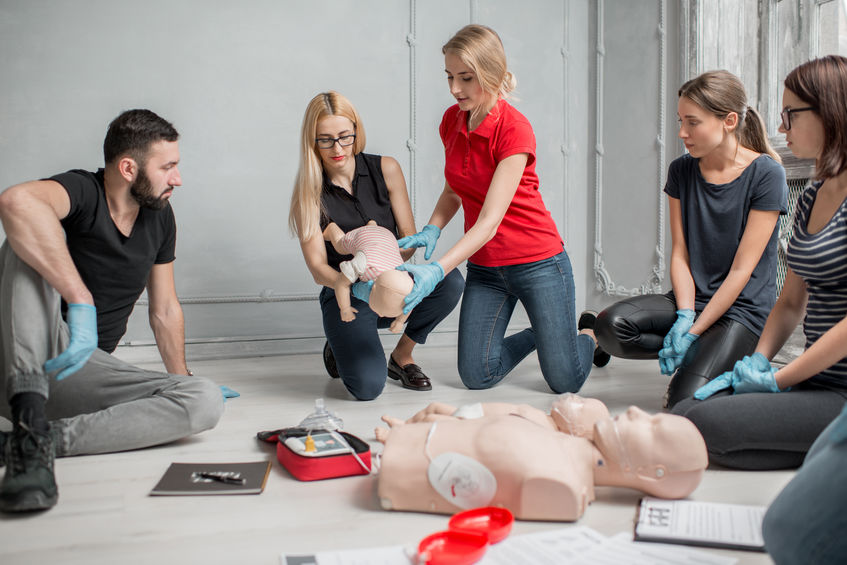
You never know when you’ll need to use your first aid skills. A first aid class will give you the confidence and skills to calmly and effectively provide relief to those in need. First aid training provides more than the knowledge and skills to effectively respond – it also provides the confidence to act when needed. It takes confidence to step forward at the critical moment when others are panicking. Taking immediate action and applying the appropriate techniques, while waiting for professional help, can considerably reduce deaths and injuries.

In 2017 556,695 Canadians learned first aid and over 1 million Canadians attended Red Cross swimming and water safety courses. Everyone can benefit from learning first aid. Every single day lives are saved and injury and illness is reduced through the efforts of ordinary individuals who have taken the time to become trained.

By increasing the number of trained first aiders across Canada, the number of preventable deaths in homes, workplaces and public spaces is likely to decline.

You cannot put a price on a life saved. First aid training is a small investment I encourage everyone to make.

First Aid Training for your team – onsite or at our Coquitlam location

To make arrangements for private group training for your team please follow this link or call 604-945-7277.

To register for a public class, please check our course listings.

We look forward to meeting you soon!

Gill McCulloch, Safe + Sound First Aid Training Ltd.

A man drowned at the beach on my daughter’s birthday.

A couple of years ago we were celebrating my daughter’s birthday at White Pines beach in Port Moody. A young man went missing in the lake, people started yelling and eventually the man was found under an inflatable raft. He was dragged onto the beach and paramedics performed CPR. The man was then airlifted to hospital where he was later pronounced dead. We packed up my daughter’s birthday gifts and left the lake in shock. I will never forget the memory of black water gushing out of that young man’s mouth onto the sand and thinking that this could have been one of my kids.

Children and adults drown at our local beaches every single year. If you are supervising non-swimmers at the beach please keep your phone in your bag and only use it in an emergency. There is nothing more important for you to do at the beach than keeping an eye on your loved ones in the water.

Maybe you’ll be the rescuer on the beach one day. Make sure you are prepared by taking first aid and CPR training every three years as recommended by the Canadian Red Cross.

Red Cross First Aid & CPR Course information

Swedish First Responders have found a unique way of getting this water safety message across to beachgoers. In a viral video by the Södra Älvsborg Rescue Service Association of Sweden, you can see two firefighters stealing cell phones on the beach! Whenever the two men spot people staring at their phones, they walk up to them and snatch the phone from the person’s hands.

Keep your phone in your bag, watch your loved ones at the beach and have a safe and happy summer.

Gill McCulloch, Safe + Sound First Aid Training Ltd.

Red Cross trainer saved by students. Would you know what to do?

Luckily for Red Cross trainer Inga Sloan her students knew what to do when she experienced a heart attack at age 39.

Inga had just started teaching her first aid class when she suddenly collapsed. With no signs, symptoms, or warning, Inga dropped to the floor and went into full cardiac arrest. She was showing no signs of life. Her trainees were quick to react. They immediately started CPR, ran to fetch the AED from the firetruck parked outside, and began working through the correct life-saving procedures as taught by Inga and the Red Cross. The training crew applied two AED shocks and administered CPR until  paramedics arrived with an ambulance to transport her to a local hospital.

They had saved Inga’s life. Read full story

Would you know what to do if a person collapsed at your feet right now?  If you‘ve never learned CPR or don’t feel confident in your skills, it’s time to register for a first aid class.

Here are some of the Red Cross courses offered by Safe + Sound:

– Emergency First Aid (1 day, $100.00+GST) adult, child & infant skills

– Standard First Aid (2 days, $160.00+GST) adult, child & infant skills

– Emergency Child Care First Aid (1 day, $100.00+GST) child and infant skills

All Red Cross certification courses include CPR and AED (defibrillator) training. Red Cross certification is good for 3 years.

Check our public course schedule or book a private class for your team at our location or yours.

If you’re not sure which course is right for you or your staff, please call 604-945-7277 or email info@learnfirstaid.ca

Act now and learn to save a life

News for Employers – Workplace First Aid Certifications in BC

Great news regarding workplace first aid certification!

Effective September 1 2018, both Canadian Red Cross Emergency First Aid (EFA) and Standard First Aid (SFA) will be recognized as equivalent to Occupational First Aid (OFA) Level 1, also known as Workplace Emergency First Aid (WEFA).

Unlike the Level 1 program, Red Cross EFA and SFA certification is transferable between all provinces and recognized nationally for workplace requirements. While Level 1 includes adult skills only, EFA and SFA include adult, child and infant skills. This is great for workers who have contact with the public.

Why are the workplace first aid requirements changing?

WorkSafeBC regularly reviews the OFA training program to ensure that it is keeping up with best practices. What’s different? The new training covers a broader spectrum of medical issues, and aligns treatment protocols with Canadian and international best practices.

Are the Occupational Health and Safety Regulation and Guidelines changing?

These changes are not a result of changes to the Occupational Health and Safety (OHS) Regulation. As part of the process of updating best practices, the OHS Guidelines are being reviewed and updated. WorkSafeBC will provide more information about this in the coming months.

Will current Red Cross Level 1 (WEFA) certificates still be valid after September 1 2018?

Yes. Current certification remains valid until the expiry date on the certificate.

Time for your team members to renew their first aid certification?

Register your staff on a public course in Coquitlam via links below or book a private class. For information or a quote for private group training at your workplace or our Coquitlam location please contact us:

Gill McCulloch
Safe + Sound First Aid Training Ltd.
604-945-7277
info@learnfirstaid.ca
learnfirstaid.ca

Public class schedule, Coquitlam:
Emergency First Aid & CPR (1 day)

Standard First aid & CPR (2 days)

Would you give first aid if it meant risking your job?

This is a question that library staff in Fraser Valley, B.C, now have to consider after being ordered not to perform first aid in emergencies.

Imagine this question on a multiple choice test.

Q: You are working in the library and you see a person fall to the floor. What should you do?

A:    Nothing, because if you help them, you risk losing your job.

B:   Give first aid because it’s the right thing to do and you might save the person’s life.

Hmmm…. A or B? let me think.

Obviously as an employer you don’t want your employees to get hurt at work. How do you prevent this from happening? You provide training and appropriate equipment. When people are trained properly they are able to make good decisions. You need to trust that your employees have a certain amount of  intelligence and common sense. If you hired them you will know that they do!

A person who is sick or injured is very unlikely to be a danger to your staff and  people suffering with mental health issues including drug addiction are far more likely to be hurt by others than to hurt people. What about the person who is choking on their gum or having a heart attack. Are you really worried that they might be a risk to you or your staff?

And who am I to get so worked up about this?

I have owned and operated Safe + Sound First Aid Training since 1999. Over the last 18 years my instructors and I have heard many heartbreaking stories of lives lost and injuries and accidents that could have been prevented. I can’t tell you the number of times I have heard the words

“If only I’d known what to do, maybe they’d be alive today”
“If only I’d had first aid training”
“If only I’d called 911”
“If only…..”

I’ve worked with doctors, paramedics and firefighters, some of whom suffer with PTSD and depression as a result of the many traumatic experiences they’ve endured. First Responders have to live with the frustration and regret over the lives they were unable to save.

“If only I’d arrived at the scene earlier”
“If only someone had called 911”
“If only a bystander had started CPR”
“If only…..”

Fraser Valley library’s policy states that:

“911 may ask you if you feel comfortable performing basic first aid, such as adjusting the customer’s position or touching the customer. Do not! Your safety may be compromised as a result. Let the 911 operator know that you are at work, that this is a customer, that you do not know the reason for the customer’s behaviour and that you do not feel comfortable or safe performing first aid on the customer.”

All employees were required sign off on the policy, acknowledging that non-compliance could result in disciplinary action, including termination i.e. being a Good Samaritan might cost you your job.

Employers should not be able to deny their staff the right to choose to give first aid or tell them to lie when they call 911!

Whatever happened to the idea of “Treat others as you’d like to be treated yourself?”

Denying people the opportunity to give first aid may lead to serious repercussions. I have spoken to a grandmother who found her grandchild dead in his crib, a woman whose brother was shot to death in front of her in the hallway of her home, a woman who tried to hold onto her drowning husband but in the end had to let go. These people will never recover fully from the trauma they have experienced and the frustration of not being able to save their loved one’s life.

When my son was five years old he choked and nearly died. Fortunately I was with him at the time and had the first aid skills to save him. Fraser Valley Library’s policy says that staff should not approach patrons in medical distress. Does this include children?

People have the right to choose to give first aid or not and library patrons should not have to start wearing bubble wrap!

Which first aid course is right for you?

Read Globe and Mail article here: Library staff in Fraser Valley, B.C. ordered not to perform first aid in emergencies

Gill McCulloch, Director, Safe + Sound First Aid Training Ltd.

Adult Mental Health First Aid

Mental Health First Aid – Learn to help people with mental health issues

When people think of first-aid training, they often think of CPR or bandages. But now there is a program that teaches people how to help those with mental health issues. If somebody breaks a leg we call 911 and the ambulance comes, but with mental health issues it’s harder to recognize the signs and the symptoms and to know what to do.

Safe + Sound offers the Mental Health First Aid course regularly in Coquitlam. The course is designed for anyone who wants to learn how they can help a friend, family member or co-worker who may be experiencing mental health issues. There is still a stigma associated with mental health and the more people are informed and involved, the better.

What is the purpose of the Mental Health First Aid Course?

– Identify when a person may be a danger to themselves or to others and take steps to preserve life.

– Recognize the early signs of mental health problems and provide help to prevent more serious problems from developing.

– Provide comfort to someone with a mental health problem and support them in the recovery of their mental health.

– Guide a person towards the appropriate professional help.

The Mental Health First Aid course isn’t designed to train people to become therapists, but rather to show them how to recognize the signs and symptoms of mental health problems such as anxiety, depression or substance abuse and learn what kind of professional help might be needed. Mental Health First Aid is a 12-hour certification course and includes video, role play and discussion.

Follow the link below for course information and online registration or call 604-945-7277

Public Classes

Mental Health First Aid course schedule, Coquitlam

Group Training – Onsite or at our Coquitlam location

Onsite Training – Mental Health First Aid

Babysitting course SD43

October 19 2018, Pro D Day Babysitting Class, Coquitlam. Register today!

Are you worried when you leave your older child at home alone with their younger siblings? If you’d like your 11-15 year old to learn babysitting skills and how to be safer when home alone, you may like to sign them up for our Red Cross Babysitting class on October 19 2018 in Coquitlam. Register online or call 604-945-7277.

What will your child learn on a Red Cross Babysitting class?

As a trained babysitter, your child will learn how to:

  • Look after babies, toddlers, preschoolers, and school-age children.
  • Care for himself/herself and siblings when home alone.
  • Create a safe environment, and deal with phone calls and unexpected visitors.
  • React confidently in case of an emergency, such as choking, bleeding, poisoning or burns.
  • Cope with common problems, such as tantrums and crying.
  • Play games and organize activities to keep kids of all ages entertained.
  • Manage a babysitting business. This includes creating a resume and a business card and asking the right questions before accepting a babysitting job.

The Canadian Red Cross Babysitting course, refreshed and revised, now has a greater emphasis on First Aid skills. The course covers everything from managing difficult behaviours to essential content on leadership and professional conduct as a babysitter. Babysitting promises to deepen and enhance the responsibility that older youth feel when caring for younger children. This updated curriculum, complete with new science, also provides improved learning when it comes to giving the appropriate care in the event of an emergency.

First Aid Content includes:

  • Check, Call, Care (includes phoning EMS/911)
  • Glove removal
  • Recovery position
  • Conscious choking (adult/child/baby/alone)
  • CPR (baby/child)
  • Illness
  • Asthma (includes use of inhaler and spacer)
  • Anaphylaxis (includes use of EpiPen)
  • Poisoning
  • Insect stings
  • Wound care (i.e. minor cuts and scrapes, splinters, nosebleeds, bumps and bruises
  • Life-threatening bleeding, burns)
  • Head, neck and back injuries
  • Broken bones
  • Seizures

For course information and online registration please follow the links below or call 604-945-7277.

Register for October 19 2018 Babysitting course, Coquitlam

Printable Flyer: 2018 Oct 19 Pro-D Day Babysitting course, Coquitlam

View Babysitting course schedule, Coquitlam

Register today and help your child build valuable skills for a lifetime. 

How Mental Health First Aid Training Saves Employers Money

As a responsible employer, you provide a physically safe environment for your workers. But what about their psychological health and safety? Are you doing enough to help your staff be their best selves at work? Supporting your employees’ mental health with Mental Health First Aid training, can improve productivity, reduce absences, and increase worker retention.

According to the Canadian Mental Health Association, one in five (20%) of Canadians, will suffer from a significant mental health condition at least once in their lifetime. Many people feel uncomfortable talking about mental health issues, however, things are changing. Media campaigns and educational courses are bringing awareness to how many Canadians are affected by mental health conditions.  These initiatives are taking away the stigma that prevents those suffering from mental health issues from seeking help.

The cost of a disability leave for a mental illness is about double the cost of a leave due to a physical illness. A growing body of international evidence demonstrates that promotion, prevention, and early intervention initiatives show positive returns on investment. Smart employers provide Mental Health First Aid training in the workplace because they want to:

  • Reduce employee absenteeism
  • Reduce medical and disability costs
  • Improve employee retention
  • Improve employee morale
  • Reduce stigma around mental health issues

Safe + Sound offers public Mental Health First Aid training in Coquitlam and we also do onsite training in organizations all over Metro Vancouver. If you’d like more information about our public courses or private Group Training for your team, please contact us.

Mental Health First Aid training in Coquitlam:

Register online for Mental Health First Aid in Coquitlam ($200.00+GST)


Tri-Cities Champions for Young Children Awards of Excellence

On May 11 2017 I attended the Tri-Cities Champions for Young Children Awards of Excellence event at the Hard Rock Casino. Presented by the Tri-Cities Early Childhood Development Committee, this event is a celebration of those who have improved the lives of children aged birth to 6 years and their families in the Tri-Cities.

As I looked around the room during the evening, I was happy to see that many of the nominees, award winners and guests are clients of Safe + Sound. Over the last 17 years we have had the pleasure of providing Red Cross First Aid training to thousands of childcare workers, parents and babysitters, most of whom live and work in the Tri-Cities.

I was particularly thrilled when Tazeen Bharucha (SD43 Strongstart) receive the award in the individual Champion category. Tazeen was one my children’s’ preschool teachers and it would be hard to find a kinder and more dedicated childcare worker. It was also wonderful to see Diane Lee from Tri-Cities Child Care Resource & Referral Program receive the Leadership Champion award – well deserved recognition of 35 years work in the childcare field.

Thank you to Trish Mandewo from Vancouver Tumblebus for nominating Safe + Sound First Aid Training for an award at this event. It was an honour to be in the same room as some of the most caring, loving, creative, people in our community; those who have dedicated their lives and their careers to protecting the most vulnerable among us – our little ones.

Kudos to Susan Foster from MCFD and all of the other event organizers, for providing a platform to recognize and inspire those in the field of childcare. Congratulations to all and keep up the good work!

Nitroglycerin or Aspirin – which is best for a heart attack victim?

When a person is experiencing a heart attack, should you give them Aspirin or Nitroglycerin?

If you suspect that a person is having a heat attack, the most important thing to do is to call 9-1-1 immediately. Don’t do anything before calling 9-1-1.

Heart attacks are usually caused by atherosclerosis (the build up of plaque on the artery walls), and complicated by thrombosis (blood clots) in the heart vessels. Anti thrombotic treatment should happen as soon as possible after a heart attack. Aspirin (ASA) helps slow down the formation of clots.

It is recommended that a person experiencing a heart attack chew 160 to 325 mg of ASA – either two low-dose (81mg) tablets or one regular strength (325 mg) tablet.

Taking ASA is not advised during a stroke, because not all strokes are caused by blood clots. Most strokes are caused by clots, but some are caused by ruptured blood vessels. Taking ASA could potentially make these bleeding strokes more severe.

Nitroglycerin “Nitro” is a symptom relief medication and does not target the underlying cause of the heart attack. First Aiders should focus on helping the person take ASA over nitroglycerin, as long as there is no contraindication. Remember to ask “Are you allergic to aspirin?”

For more information on giving aspirin during a heart attack or stroke please follow this link: http://www.heart.org/HEARTORG/Conditions/HeartAttack/PreventionTreatmentofHeartAttack/Aspirin-and-Heart-Disease_UCM_321714_Article.jsp#.WQjdLdLyuUk